
Found «tv» tag in the Posts


The only thing I hate about Top Gear TV show, is celebrities fragments.
I really don't give a flying fuck what they do, what they think or what they have to say.
There are plenty of these tropes—and not just in American detective stories and action movies. Productions sometimes display staggering idiocy too—but I’ve picked out five that simply make me laugh.
1. The hero is a loser who’s been fired or demoted. His wife has left him. He’s drinking himself to death. He’s a psychopath. A total piece of work. Yet, we’re shown this pathetic specimen suddenly pulling off twenty-six heroic feats in a row, taking out every single villain. It seems the screenwriters are drinking themselves to death, too.
2. The hero invariably keeps a stash of newspaper clippings in a special drawer. Close-ups of the headlines: «Horrific Murder in the Bronx,» «Mysterious Disappearance,» «God Knows What Happened, But Let’s Make the Audience Worry.» He holds onto these clippings and hauls them around his whole life; he has absolutely no other treasures.
3. The hero learns the most important information from the TV. He walks into a bar to down a whiskey with his last few bucks, and behold!—the TV announces the very news the plot hinges on. The news anchor might as well be looking right at the hero and saying, «Oh, you made it? Here’s a news item just for you!» All the other characters—the bad guys included—find everything out from the TV too, like the fact that they’re wanted by the police and need to get out of town. It’s nothing but television.
4. The hero suddenly discovers he has a long-lost child or an elderly father—someone he hasn’t spoken to in years. The dad is handy for the finale, of course: the hero gives him a hug and realizes the value of family. And the kid is a total gem, because he’s convenient for the bad guy to take hostage (having obviously learned the address from TV)—allowing the hero not only to realize the value of family but also to articulate it to the child: «I’ve wronged your mother, your grandmother, and your dog; and I’m also guilty of spouting all this crap instead of just putting a bullet in the screenwriter.»
5. A mini psychoanalysis session. It invariably features the line: «You know what your problem is?» Usually, the bad guy delivers this while the good guy is bleeding out with a gun pointed at his face. The bad guy then identifies the problem—typically some utter nonsense like «You love your job too much, John»—but the scene simply wouldn't work without that «problem.» I feel the problem should be something like: «You kept those newspaper clippings too carefully, John.» That alone should be enough for the hero to pull himself together and kill the bad guy, avenging the desecrated newspaper clippings.
In the past, when educational TV shows were broadcast (Wheeler Dealers with Edd China)
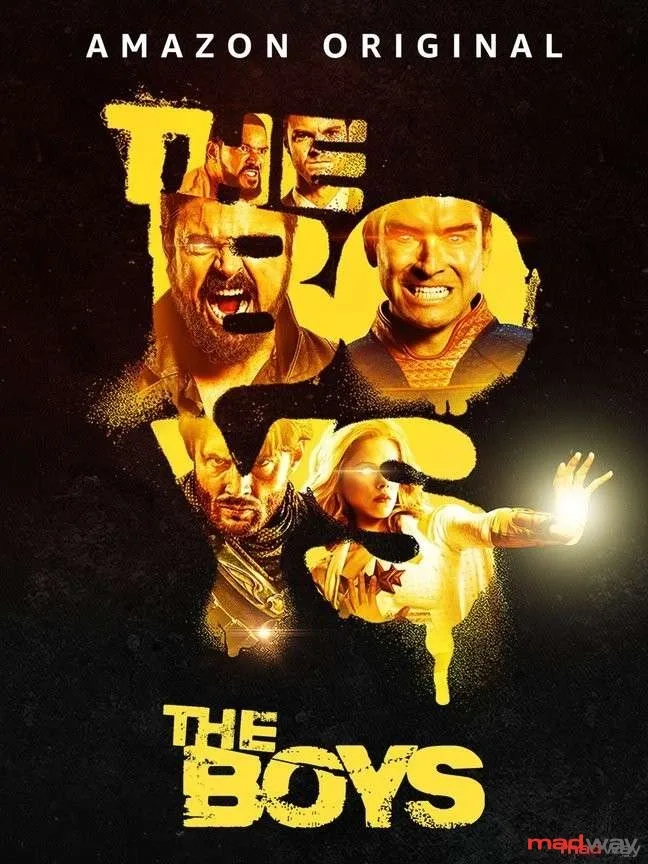
Superheroes are often as popular as celebrities, as influential as politicians, and sometimes even as revered as gods. But that's when they're using their powers for good. What happens when the heroes go rogue and start abusing their powers? When it's the powerless against the super powerful, the Boys head out on a heroic quest to expose the truth about the Seven and Vought, the multibillion-dollar conglomerate that manages the superheroes and covers up their dirty secrets. Based on the comic book series of the same name.
Hooray! Everything is read.
No more pages to load

